





Drying a home is only half the job. After readings return to normal, the bare subfloor, cut-out drywall and missing floors still need attention. Rebuilding all of that is what water damage repair means. In Spring, we put back the materials that were lost and match them to the originals, turning a work zone into a normal room again.
Repair work covers a wide range. On a small job it may be a few feet of drywall, new baseboard and paint. At the bigger end, expect doors, trim, cabinet boxes, hardwood or laminate flooring, subfloor, full drywall sheets and insulation. We replace materials like for like where possible, and we tell you plainly when an exact match is not available so you can choose.
We do not close anything in while it is still damp. Before any new material goes on, we confirm with a moisture meter that framing and subfloor are at normal levels. Mold hidden in a newly painted wall usually traces back to someone covering damp lumber. We also give you a written scope and a schedule before work starts, so you know what is being rebuilt and in what order.
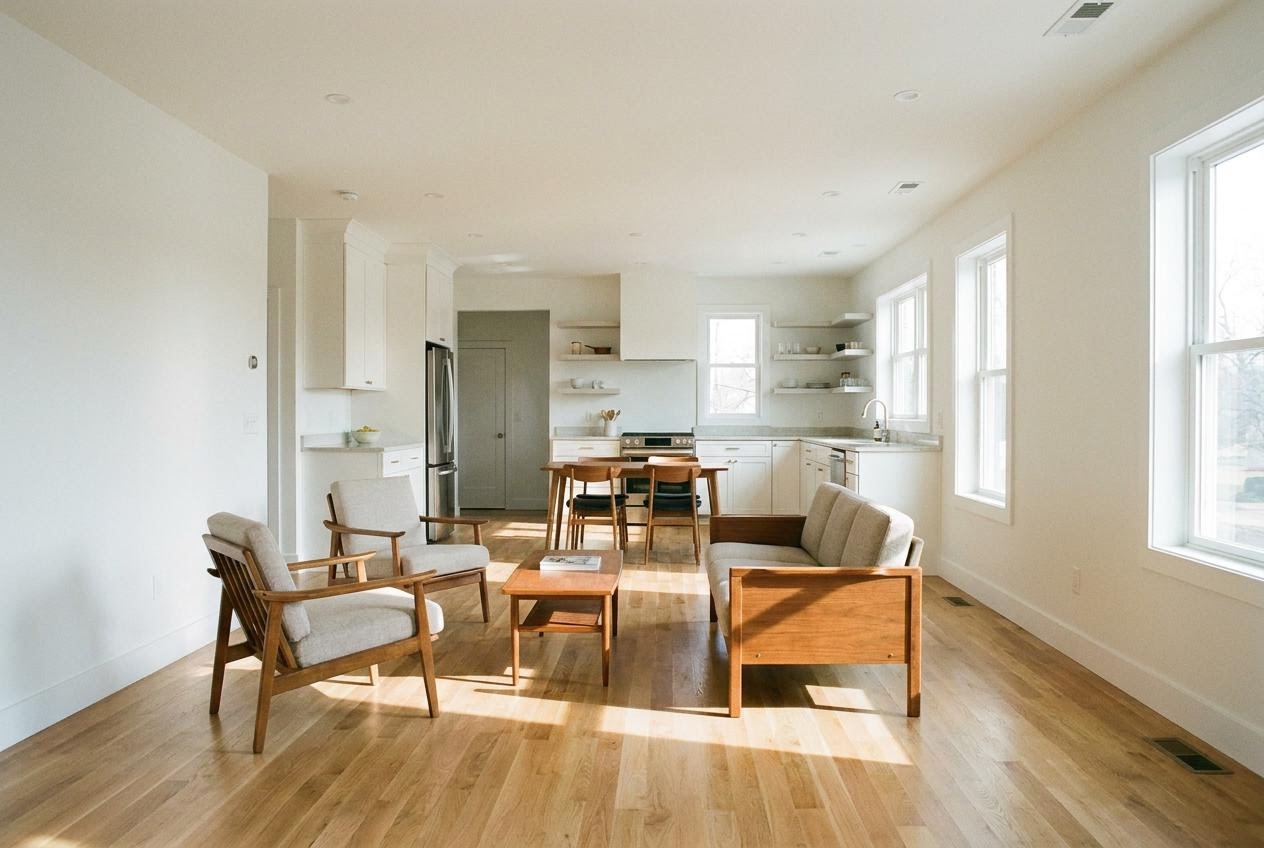
Water Damage Repair: DIY or Professional?
Some simple tasks are suitable for DIY, but most water damage work benefits from professional tools, training, and experience. Here's a comparison:
| Factor | DIY Approach | Professional Service |
|---|---|---|
| Matching the floor | Closest thing at the store | Matched to your current boards |
| Permits and approvals | Easy to miss or skip | Handled where the work requires them |
| What is behind the wall | Unknown until it smells or stains | Wet areas already mapped during drying |
| Claim paperwork | You build the estimate yourself | Scope written in insurer format |
| Schedule | Several weeks of spare weekends | Scheduled crew, set sequence |
Ready to Solve Your Water Damage Repair Problem?
Our IICRC-certified technicians are standing by to help.
Call (785) 203-1097 TodayWhy Professional Water Damage Repair Matters
This is not the same as a standard renovation project. A rebuilder must know the path the water took, the harm it caused and if the structure hidden by the wall is actually dry. Our team works from the moisture records taken during drying, so we know which studs were wet, which subfloor was treated and where to look twice. With that history in hand, problems do not get buried under fresh paint and new drywall.
Matching is the other skill. If the patch stands out, it reminds you of the damage daily. Wall texture is blended, paint is feathered out to natural breaks, and flooring is sourced to line up with the boards already there when available. Should a match prove impossible, we present choices like replacing the floor up to a doorway. Permits, where required for the work, are handled by us, and your insurer stays informed.
How to Tell You Need Water Damage Repair
Catching these issues early helps you avoid costly problems and protect your property. Here are the most common indicators that it's time to call a professional:
- The lower part of cabinet sides or bases feels soft, looks swollen or is peeling.
- Wood floor boards stayed raised, cupped or crowned even once the moisture was gone.
- Wall cavities remain open where drywall was removed for drying.
- Trim around doors and along the floor is bowed and will not lie flat.
- Interior doors now stick or will not latch after swelling from moisture.
- Where water ran down a wall, the paint has blistered, peeled or turned brown.
- The edges of your laminate or vinyl planks have puffed up, curled or pulled apart.
Don't Wait Until It's an Emergency
What seems like a minor issue today can turn into a major expense tomorrow. If you notice any of these signs, contact Spring Restoration at (785) 203-1097 for a prompt evaluation.
Water Damage Repair FAQ
Want a Professional Opinion?
We provide honest advice and free estimates on all water damage repair work.
Call (785) 203-1097 NowWater Damage Repair Prevention Tips
Taking preventive measures can help you avoid costly water damage issues down the road. Here are our expert recommendations:
- In case the insurance company asks down the road, photograph anything damaged while it is still in place.
- Laundry rooms, bathrooms and kitchens should be rebuilt with moisture resistant wallboard and proper backer board.
- Rebuilt bathroom walls last longer when the exhaust fan runs through and after each shower.
- A water stain should stay unpainted and unpatched while its cause is still active.
- Fresh caulk every year around showers, tubs and sinks stops water reaching the wall cavity.
- Save spare tile and flooring, plus paint color details, for matching later repairs.
How We Handle Water Damage Repair
Our systematic approach delivers quality results on every project. Here's how we handle water damage repair from start to finish:
Verify Dryness First
Final moisture readings are taken on the subfloor, framing and any drywall left in place. Until the readings are normal for every material, no reconstruction happens, and no moisture gets trapped.
Put the Scope in Writing
We hand you a list, room by room, covering what gets replaced, planned materials and the likely schedule. If a claim is open, we line the scope up with the adjuster.
Reconstruct and Install
Insulation goes back into open cavities, drywall is hung, taped and finished, and subfloor is repaired. After that we install trim, cabinetry and floors, ordering the work so completed surfaces are not damaged.
Finish and Walk Through
We match texture, prime and paint, and reinstall doors, baseboards and hardware. Before calling it done, our team tours all the rooms with you and takes care of each item noted.
Talk to a Water Damage Repair Expert
The sooner you call, the sooner we can help. Reach Spring Restoration for same-day service.
Get Help: (785) 203-1097